
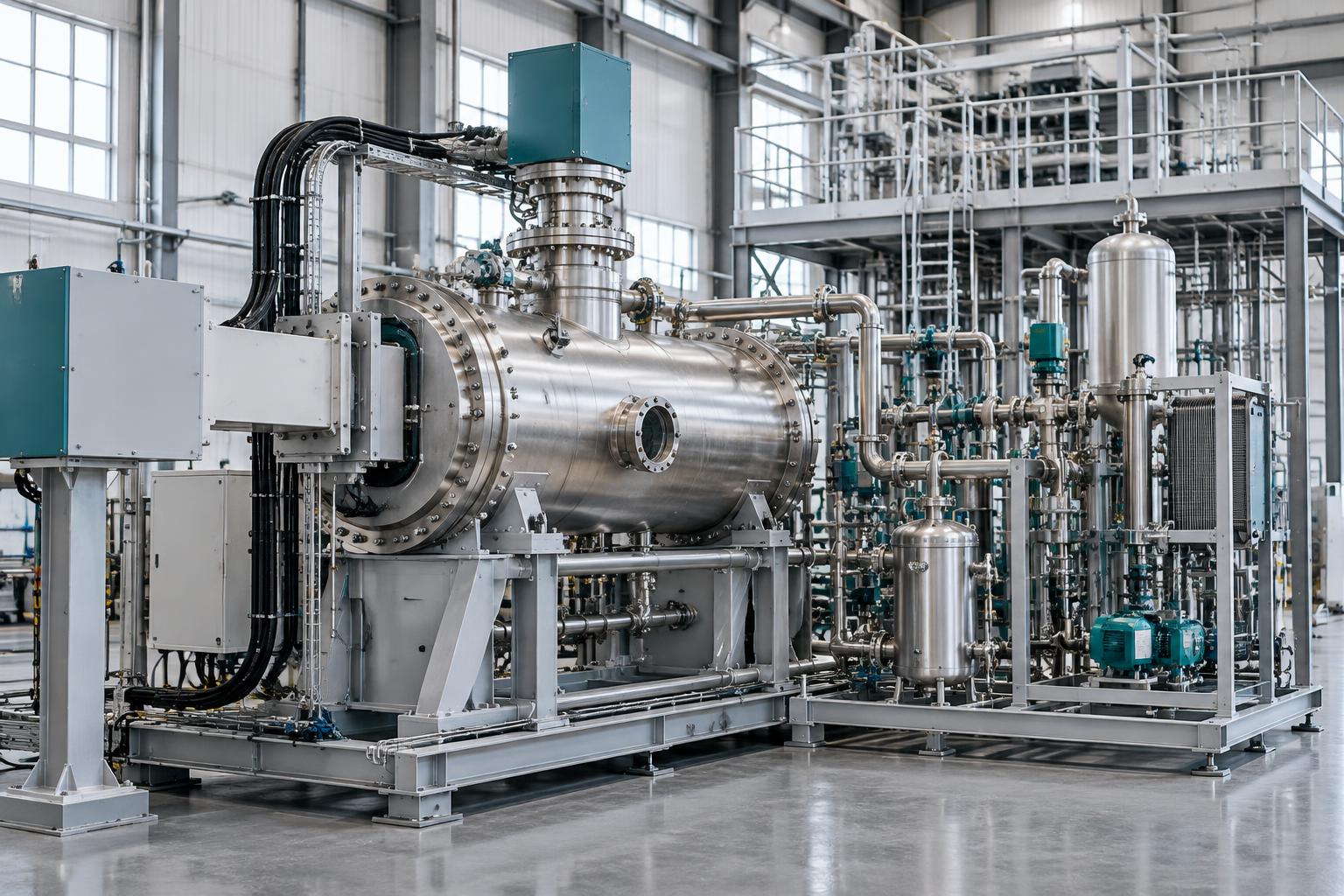
Our Technology
Hybrid Microwave Plasma Gasification.
A modular thermal conversion platform designed to transform prepared feedstocks into conditioned process gas and recoverable products.
The process
Five stages from waste to market.
- 01
Feedstock
- 02
Plasma Conversion
- 03
Gas Conditioning
- 04
Product Recovery
- 05
Commercial Applications
Platform elements
Engineered across the full chain.
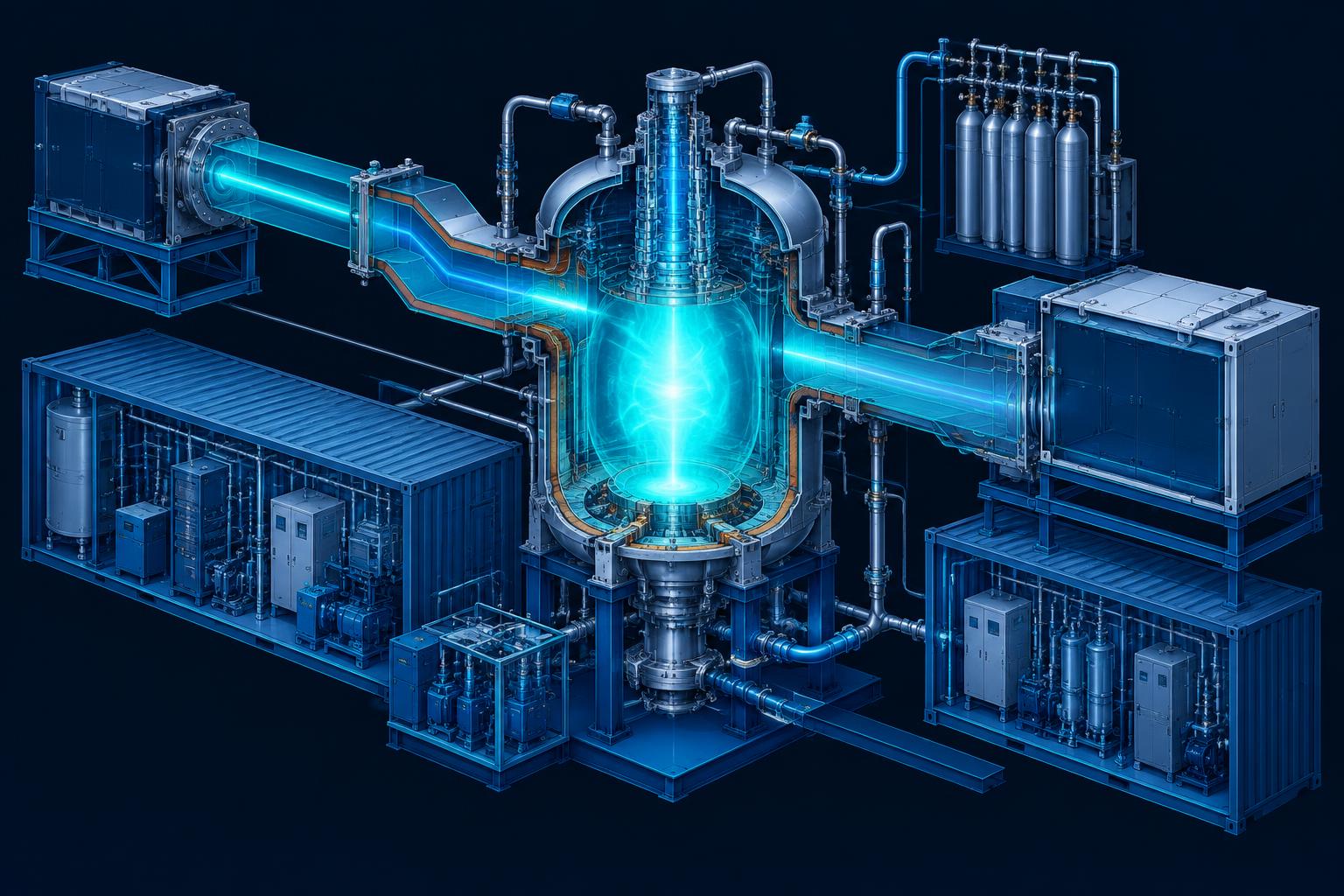
Electrodeless microwave plasma
High-temperature conversion
Feedstock preparation
Process gas & material streams
Gas cleaning & conditioning
Tail-gas recycling & tar reforming
Hydrogen separation
Carbon recovery & upgrading
Modular integration
Technology advantages
Why Hybrid Microwave Plasma Technology Is Different
Our process platform builds on hybrid microwave plasma technology from international microwave-plasma technology development. Below are its reported technology capabilities.
Electrodeless microwave plasma
Plasma generated by microwave energy, avoiding the electrode consumption associated with conventional arc-plasma torches.
Plasma temperatures above 2,000°C
Reported plasma temperatures exceeding 2,000°C drive deep thermal breakdown of carbon-rich material.
Advanced tar reforming
Tar reforming integrated into the process; the developer reports tar elimination in its configuration.
Tail-Gas Recycling (TGR)
Process gases are recirculated back into the system to improve conversion and gas quality.
Closed-loop-oriented processing
Processing designed around gas recirculation; the technology developer reports a design that operates without a conventional smokestack.
Hydrogen for internal power
Potential to use a portion of produced hydrogen to generate internal facility power.
Modular, containerized
Containerized facility configurations supporting phased deployment close to feedstock sources.
Multiple feedstock applications
Applications reported across woody biomass, coal, plastics and other carbon-rich waste materials.
Integrated gas conditioning & recovery
Gas conditioning and product recovery integrated into the process train rather than bolted on.
Process diagram
- 01
Feedstock Preparation
- 02
Microwave Plasma Conversion
- 03
Gas Conditioning / Tar Reforming
- 04
Hydrogen & Product Recovery
- 05
Downstream Commercial Products
Performance characteristics marked "reported capability" are reported by the underlying technology developer and have not been independently certified. Actual performance depends on feedstock, configuration and engineering validation.
Technology heritage
Years of development in South Korea.
- Development base
- South Korea
- Installation scale
- ~3 MW
- Development testing
- Industrial scale
The underlying hybrid microwave plasma technology has been developed by the underlying technology developer over many years in South Korea, including microwave-plasma research, industrial equipment development and testing on woody biomass, coal and other carbon-rich materials.
That development is associated with an installation of approximately 3 MW scale. Plasma Biofuels does not own or operate the Korean facilities; our role is to bring this technology experience to a first U.S. commercial deployment.
Comparison
How it compares to conventional approaches.
Each technology has its place. This general overview highlights design differences — individual conventional systems vary and many incorporate their own gas treatment and energy recovery.
Hybrid Microwave Plasma (HMPG)
- Conversion method
- Electrodeless microwave plasma; reported temperatures above 2,000°C
- Tar management
- Integrated tar reforming; developer reports tar elimination
- Recoverable products
- Hydrogen focus, plus carbon, fuel and chemical pathways
- Process-gas recycling
- Tail-Gas Recycling built into the process design
- Energy integration
- Potential internal power from a portion of produced hydrogen
- Modular configuration
- Containerized modules, phased scale-up
Incineration
- Conversion method
- Combustion with excess air to heat and flue gas
- Tar management
- Not a primary concern — material is combusted
- Recoverable products
- Primarily heat or power; ash residue
- Process-gas recycling
- Not typically part of the process concept
- Energy integration
- Heat recovery to steam or power
- Modular configuration
- Typically large, centralized plants
Pyrolysis
- Conversion method
- Thermal decomposition in the absence of oxygen
- Tar management
- Tars and oils are typically a significant output stream
- Recoverable products
- Oils, char and gas
- Process-gas recycling
- Product gas may be used for process heat
- Energy integration
- Gas or char often fuels process heat
- Modular configuration
- Ranges from small units to large plants
Traditional Gasification
- Conversion method
- Partial oxidation to syngas in a gasifier
- Tar management
- Varies by design; often relies on downstream tar treatment
- Recoverable products
- Syngas for power, fuels or chemicals
- Process-gas recycling
- Used in some designs
- Energy integration
- Syngas may supply process heat or power
- Modular configuration
- Ranges by technology; often site-built
Engineering reality
Configured for each project.
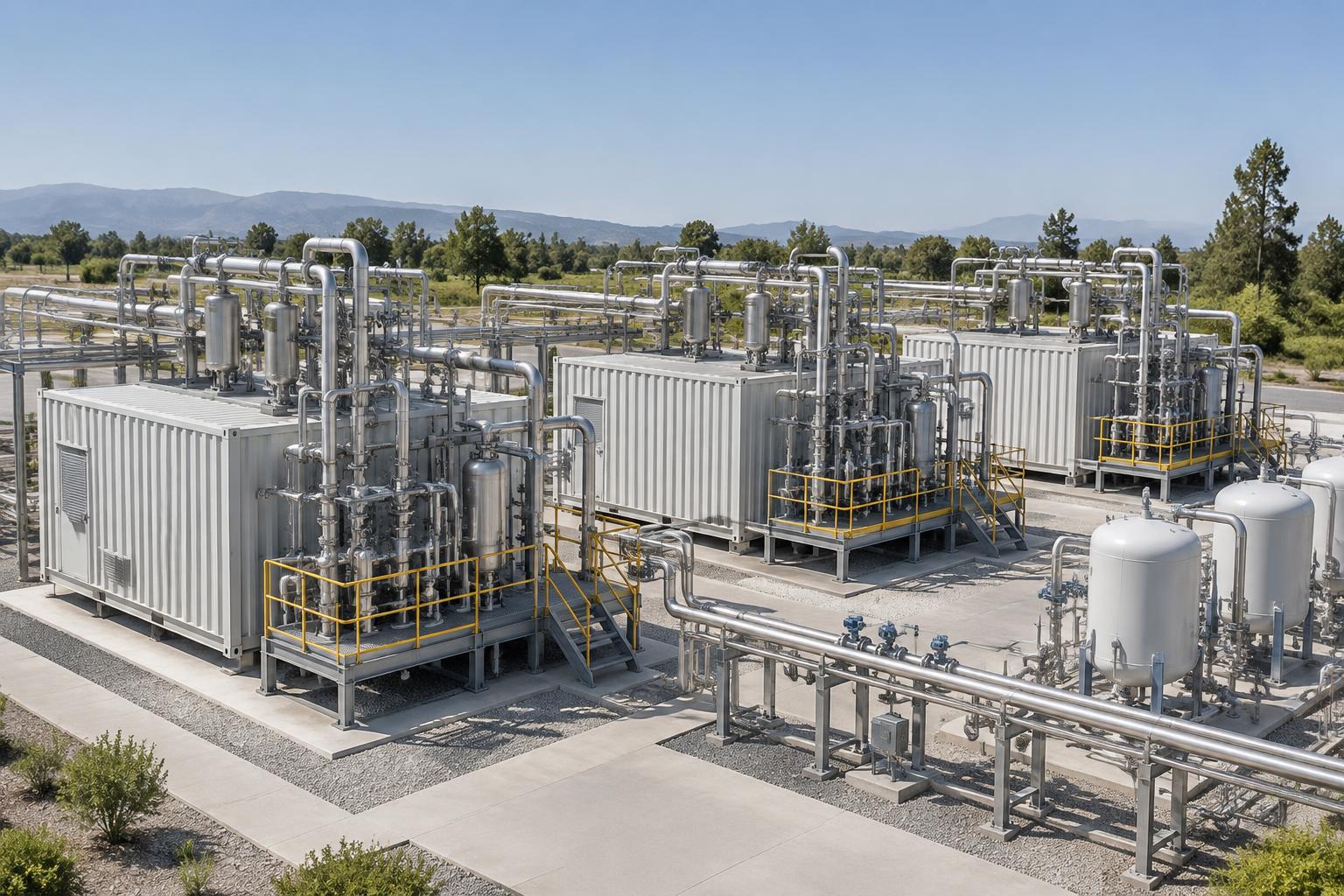
Actual process configurations, recoveries, emissions, energy balance and product specifications depend on the feedstock, engineering design and validation. Not every feedstock or configuration produces every product.
Facility image is a conceptual visualization.
Explore the technology with our team.
We work with feedstock suppliers, industrial offtakers, site hosts, engineering partners and investors to move projects forward.